
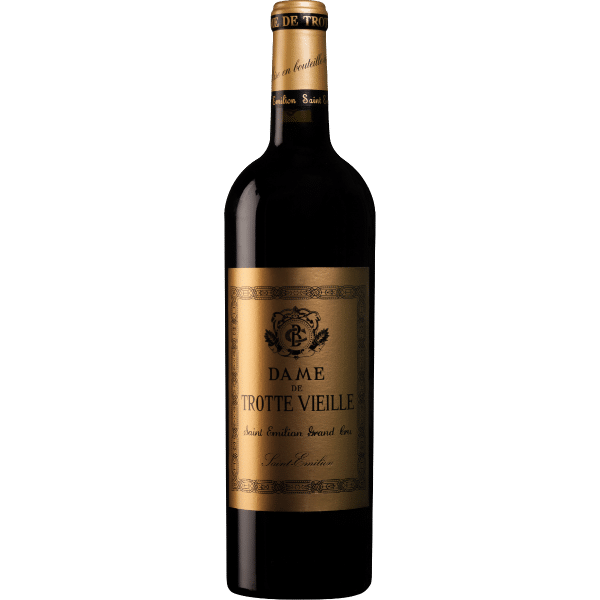
2015 Dame De Trotte Vieille St. Emilion Grand Cru
Tasting Notes:
The Second Wine, also a Saint-Émilion Grand Cru, is highly appreciated for its elegance and harmony. It shows a garnet hue, while the nose is rich, fruity and floral with notes of oak and coffee coming through. On the palate, the wine is fresh, delicious to taste, with round tannins and notes of red berry fruit. Like the First Wine, it has superb length of flavour.
About Chateau Trottevieille:
A record of the estate’s existence goes back to the 15th century in the form of a lease contract drawn up in the Gascon language on parchment. The origin of the TrotteVieille name, according to legend, is that a curious old lady living at the place at the time used to trot down regularly to the post house nearby in order to get the latest news!
Before the French Revolution, the land at TrotteVieille belonged to Jean Laveau, the owner of Château Villemaurine (a Saint-Émilion Grand Cru Classé). In 1841, Isambert, a lawyer and the owner of Château L’Evangile in Pomerol, acquired the property.
After Marcel Borie passed way, Émile Castéja, his son-in-law, took over the estate. During the 1990s, Philippe Castéja, the son of Émile Castéja and Denise Borie, took over the running of Château TrotteVieille.
During the 2000s, Émile Castéja and Philippe Castéja launched Vieille Dame de TrotteVieille, the Second Wine of Château TrotteVieille. As from the 2010 vintage, the Second Wine’s name changed to Dame de TrotteVieille
In 2012, Château TrotteVieille integrated the vines of the four-hectare Château Bergat, a Saint-Émilion Grand Cru Classé.
Tasting Notes:
The Second Wine, also a Saint-Émilion Grand Cru, is highly appreciated for its elegance and harmony. It shows a garnet hue, while the nose is rich, fruity and floral with notes of oak and coffee coming through. On the palate, the wine is fresh, delicious to taste, with round tannins and notes of red berry fruit. Like the First Wine, it has superb length of flavour.
About Chateau Trottevieille:
A record of the estate’s existence goes back to the 15th century in the form of a lease contract drawn up in the Gascon language on parchment. The origin of the TrotteVieille name, according to legend, is that a curious old lady living at the place at the time used to trot down regularly to the post house nearby in order to get the latest news!
Before the French Revolution, the land at TrotteVieille belonged to Jean Laveau, the owner of Château Villemaurine (a Saint-Émilion Grand Cru Classé). In 1841, Isambert, a lawyer and the owner of Château L’Evangile in Pomerol, acquired the property.
After Marcel Borie passed way, Émile Castéja, his son-in-law, took over the estate. During the 1990s, Philippe Castéja, the son of Émile Castéja and Denise Borie, took over the running of Château TrotteVieille.
During the 2000s, Émile Castéja and Philippe Castéja launched Vieille Dame de TrotteVieille, the Second Wine of Château TrotteVieille. As from the 2010 vintage, the Second Wine’s name changed to Dame de TrotteVieille
In 2012, Château TrotteVieille integrated the vines of the four-hectare Château Bergat, a Saint-Émilion Grand Cru Classé.