Tasting Notes
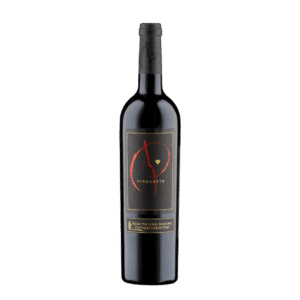
Deep purple-ruby in color. Initial aromas are earthy and woodsy, with glimpses of redcurrant and plum jam fruit. On the palate, initially smooth, with plum jam fruit and fruity, sour and bitter components. Given a little time, it opens up nicely to a silky palate with black cherry fruit, finishing with firm, fine-grained tannins. A relatively large proportion of Cabernet for this blend at 43% makes the 2021 vintage of RED initially more structured, so be sure to decant or age.
Food Pairings – slow-braised short ribs, a beef and wild mushroom stew, or other dishes with deep, meaty, roasted flavors.
VINEYARD The Hendry Vineyard is located on benchlands west of the town of Napa. The vines grow on thin, stony and clay soils, between 200 and 300 feet above sea level. Morning fog and strong afternoon breezes from San Pablo Bay moderate our climate. Our vineyard is the sole source for grapes for all of our wines. It has been home to the Hendry family since 1939.
VINTAGE In 2021, budbreak in these blocks started March 28th for the early varieties and ended approximately April 7h for the later ones. Bloom was between May 13th and the 22nd. Harvest for the Bordeaux grapes started on September 6th with Merlot, followed by Malbec, continuing through October 6th for the later types (Cabernet Franc,Petit Verdot and Cabernet Sauvignon). Average bloom-to-harvest was 125 days, ranging from 114 days for Block 13
Merlot to 141 days for the Cabernet Franc in Block 26. Yield was an average of 1.69 tons per acre throughout these blocks.
WINEMAKING Each year, we pick each of our small blocks of each of these five Bordeaux varieties, ferment them individually and then barrel age them all for one year. After the first year of barrel aging, George Hendry works on the final blend before returning the wine to barrel for the final six months of aging. His aim is to make a wine with a concentration, complexity and potential for aging, but with more subtle tannic structure than a 100% Cabernet Sauvignon wine. This wine was aged for a total of 18 months in French oak barrels, 70-75% of which
were new.
About Hendry Vineyard
We are proud of the fact that we have owned and farmed our land for more than 80 years. No one deserves more credit for this accomplishment than Margaret Hendry.
On April 15, 1944, just 5 years after they had purchased the property, her husband George Whiting Hendry died suddenly and unexpectedly from a heart attack. The ranch was left to Margaret, and their two sons George O. and Andrew, who were still young children at the time. For the next 30 years, the resilient and resourceful Margaret single-handedly maintained and managed the ranch, raised her two children, and cared for her ailing father.
During that time, she oversaw the farming of grapes, prune-plums, walnuts and cattle. In addition, she took in boarders at the house, and for a time taught in the local school to make ends meet through tough times. She made certain that both her sons understood the privilege and responsibility of a good education, and that their education included musical training as well. She was able, somehow, to put them both through university. Her eldest, George, graduated from U.C. Berkeley, and her younger son, Andrew, from U.C. Davis.
Napa in the 1940s 50s and 60s
Napa is widely perceived as a well-established grape growing region, but the Napa of these three decades is barely recognizable today. Following prohibition, and as late as 1960, the value of Napa’s prune crop exceeded its grape crop. Grape acreage remained at about half of its 1890 level, and grape prices climbed very slowly from as low as 17 dollars per ton in 1940 to only 120 by 1965. The six acres of vineyard around the house continued to produce grapes, but the rest of the ranch remained as prune orchard and pasture.
George O. Hendry
With his parents and brother, George moved to Napa in 1939 at the age of two. He grew up on the ranch and learned to tend the goats, the cows, the prune orchard and the grapevines. He completed his undergraduate degree at U.C. Berkeley in 1959 and after two years in the navy, completed a masters degree in 1963. Following graduation, George began working for a company called the Cyclotron Corporation. (Cyclotrons are a type of particle accelerator primarily used for the production of radio isotopes used in medical imaging.)
Over the next 40 years, at various companies—including his own—George distinguished himself as a cyclotron designer. Many of his designs and innovations are in use in cyclotrons and hospitals around the world. George’s latest innovative cyclotron design was completed in 2008, and he continues to consult for the company he founded. When he wasn’t designing cyclotrons, George was working on the ranch.
Mid-70s Plantings and Changes in Napa
The late 1960s and early 1970s saw a profound change in Napa’s wine industry. The price of grapes was rising rapidly, the focus of wineries was shifting from quantity to quality, and vineyard plantings were on the rise. With his engineering earnings, George built a reservoir, and in 1973, 74, and 75, replanted most of the ranch to vineyard. Some of these plantings returned vineyard to land that had been fallow for nearly 100 years.
Initially, George grafted only Zinfandel and Pinot Noir, but with time, and a growing understanding of the ranch’s potential, George re-grafted 20 acres of the Zinfandel to Chardonnay, and 20 acres to Cabernet Sauvignon.
In the 1970s, Robert Mondavi was a rising star in Napa’s wine industry, and was soon buying the grapes from the ranch. By the late 80s Mondavi was buying all of the Pinot Noir and Chardonnay, and dividing the Cabernet Sauvignon with Opus One. Kent Rosenblum was buying the remaining 9 acres of Zinfandel and bottling a “George Hendry Reserve”. After 50 years of growing, the Hendry Ranch was beginning to develop a reputation for its grapes.
Making Wine – 1992
With the 1970s plantings well established, and the vineyard on firm financial footing, George began to make wine. The first vintage in the Hendry label was in 1992, and included Pinot Noir, Cabernet Sauvignon, and Zinfandel. Over the next ten years, George sold smaller and smaller quantities, and crushed more for his own wines. George’s cyclotron business partner Jeff Miller, and neighbor Susan Ridley became partners in the winery business, and helped with its expansion.
Vineyard Expansion – 1994
Another significant development in the history of the ranch was the expansion of the vineyard through the purchase of a neighboring property in 1994. This property is a continuation of the gently sloping bench lands of the original Hendry Ranch and contains 47 plantable acres. All of these acres however, were grafted to AXR-1 rootstock and were dying from phylloxera, Napa’s second epidemic. AXR replanting began in 1993, and continued until approximately 2001, eventually totaling nearly 70 acres. The removal and redevelopment of these vineyards created new blocks, included new varieties such as Pinot Gris, Merlot, Malbec, Petit Verdot, Primitivo, Cabernet Franc. With this property addition, the Hendry Ranch now totals 114 vineyard acres and is divided into thirty numbered blocks.